A changing surface
The author describes colour development during heating, local changes under a heated gas flow, and patterns formed by redistributed droplets. These are process observations; this edition does not yet include measured datasets.
A technology
given to the world.
Matter can be transformed.
MATTER BECOMES COLOUR
I could have hidden it. I could have turned it into a secret. I chose something else.
I give it to the world.
Freely. So another person can continue where I stopped. So someone can discover an effect I have never seen.
EVGUENI SEMENOV · FOUNDER OF MMASome ideas become larger than the person who discovers them. The path to this process was mine. Its future does not have to be.
Knowledge grows when it is given away.
“Perhaps an idea does not belong entirely to the person through whom it arrives.”
If you call its source the Creator, Nature, the Universe, Providence or human curiosity, the answer is yours.
I do not want to be the owner of MMA.
I want to be its first messenger.
Mine was only the first.
I am not giving you finished images. I am giving you a way to create something that does not yet exist.
No required colour. No required pattern.
There is matter. And the possibility of change.
Everything begins with matter.
Powders become layers.
Layers become structures.
Matter finds a direction.
Air accelerates particles.
Moves liquid. Breaks droplets.
Colour is moving.
Heat does not paint the metal.
Its surface evolves. Colour follows. There is a moment when the transformation must stop.Liquid carries chemistry into matter.
Local events across the metal.
“Water” represents the liquid phase and chemical reaction. It does not mean water alone.The author’s photographs show the stages of one surface. The sequence begins with clean iron on the right and moves left toward the finished result.
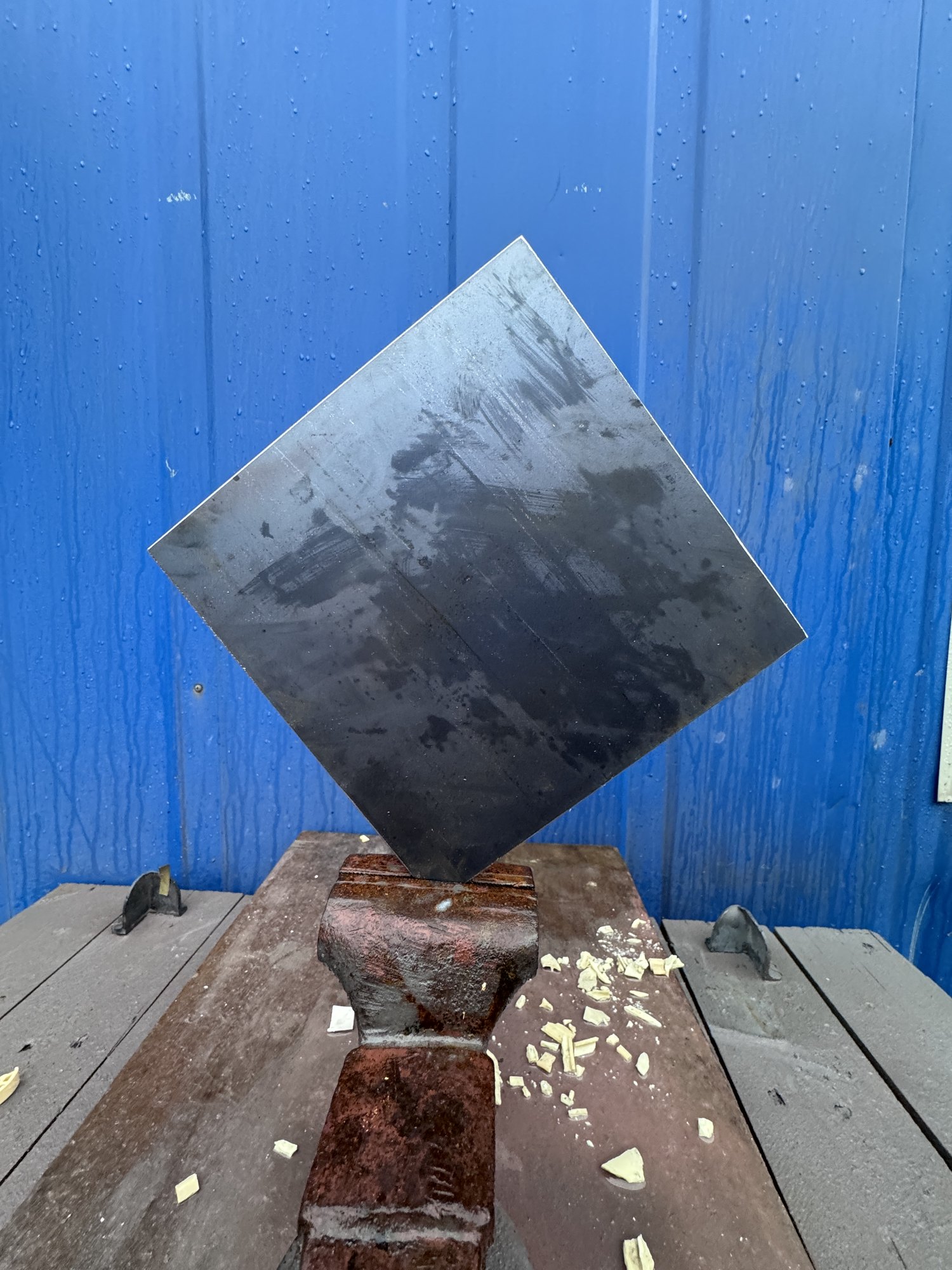
A clean iron plate.
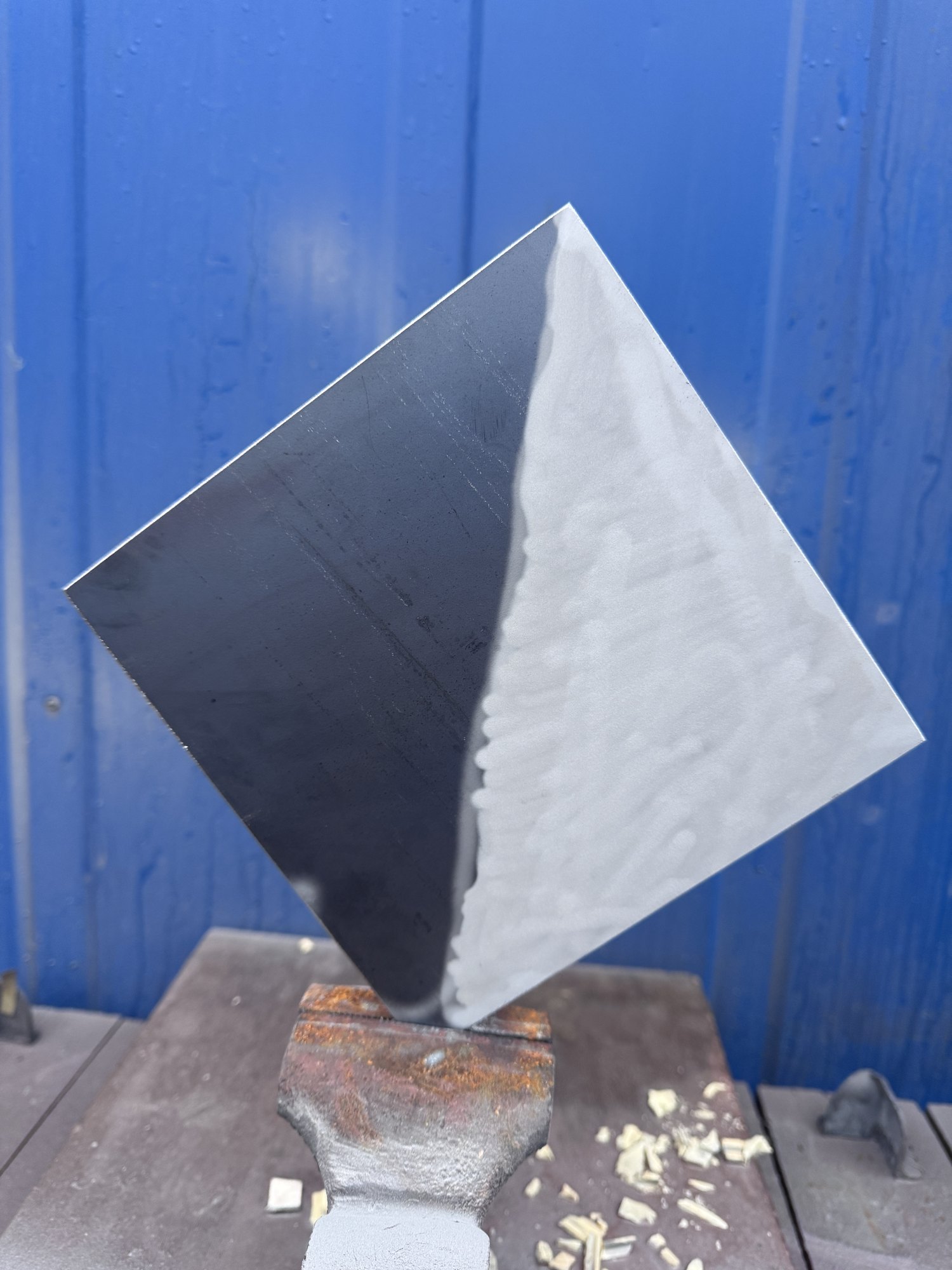
One half is covered with the first metal.
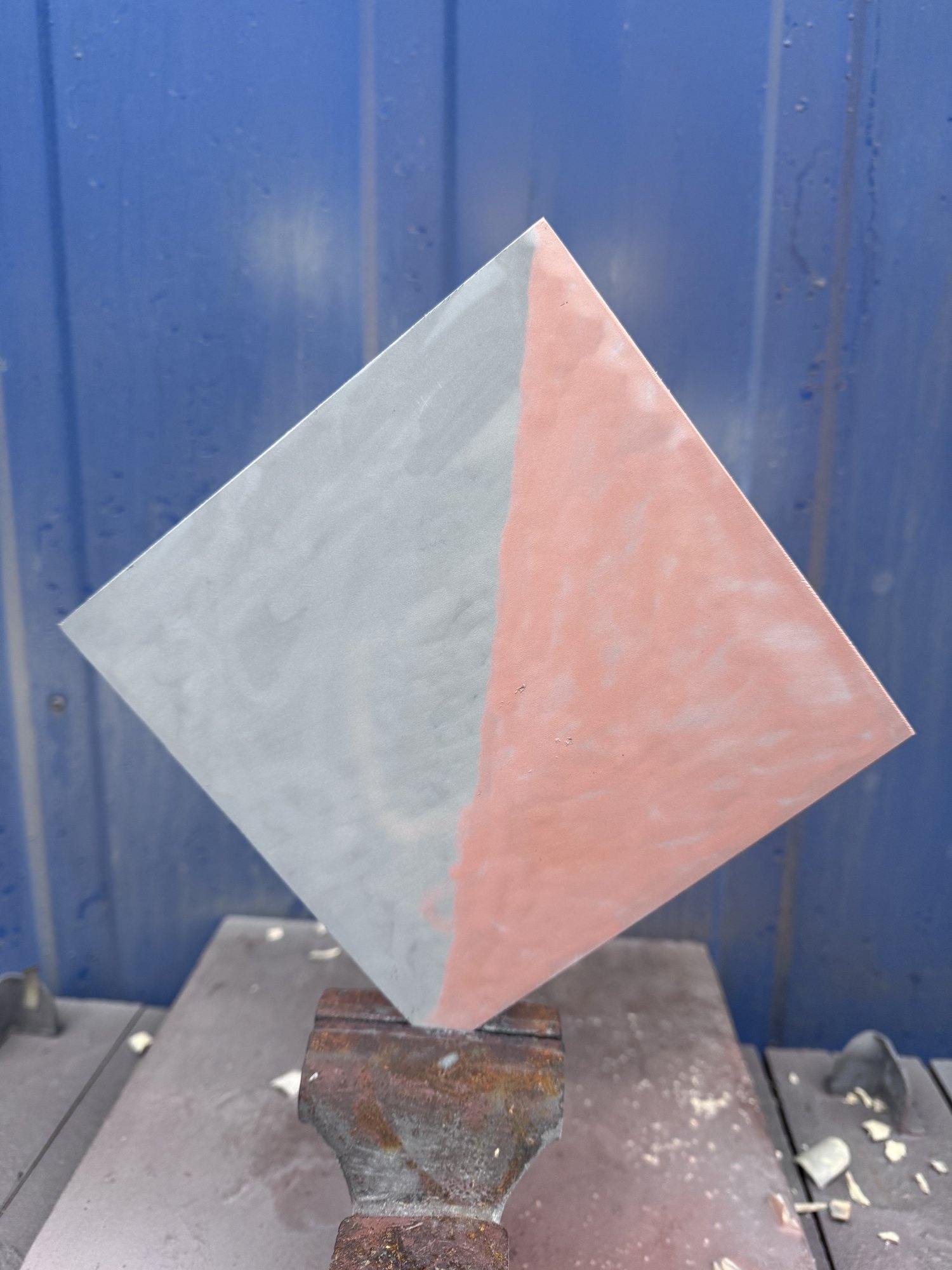
The other half receives a different metal.
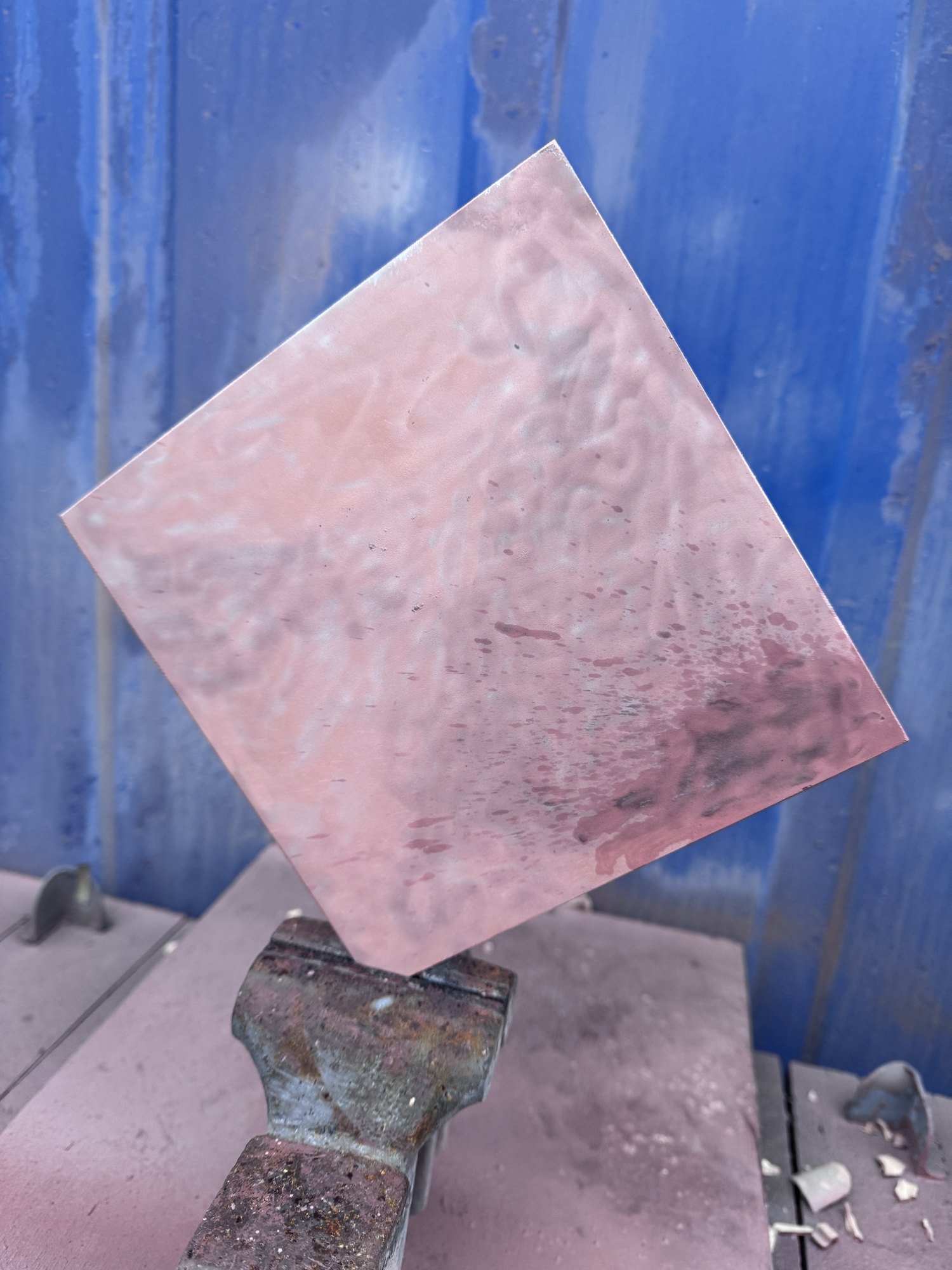
Chemical treatment is applied to the surface.
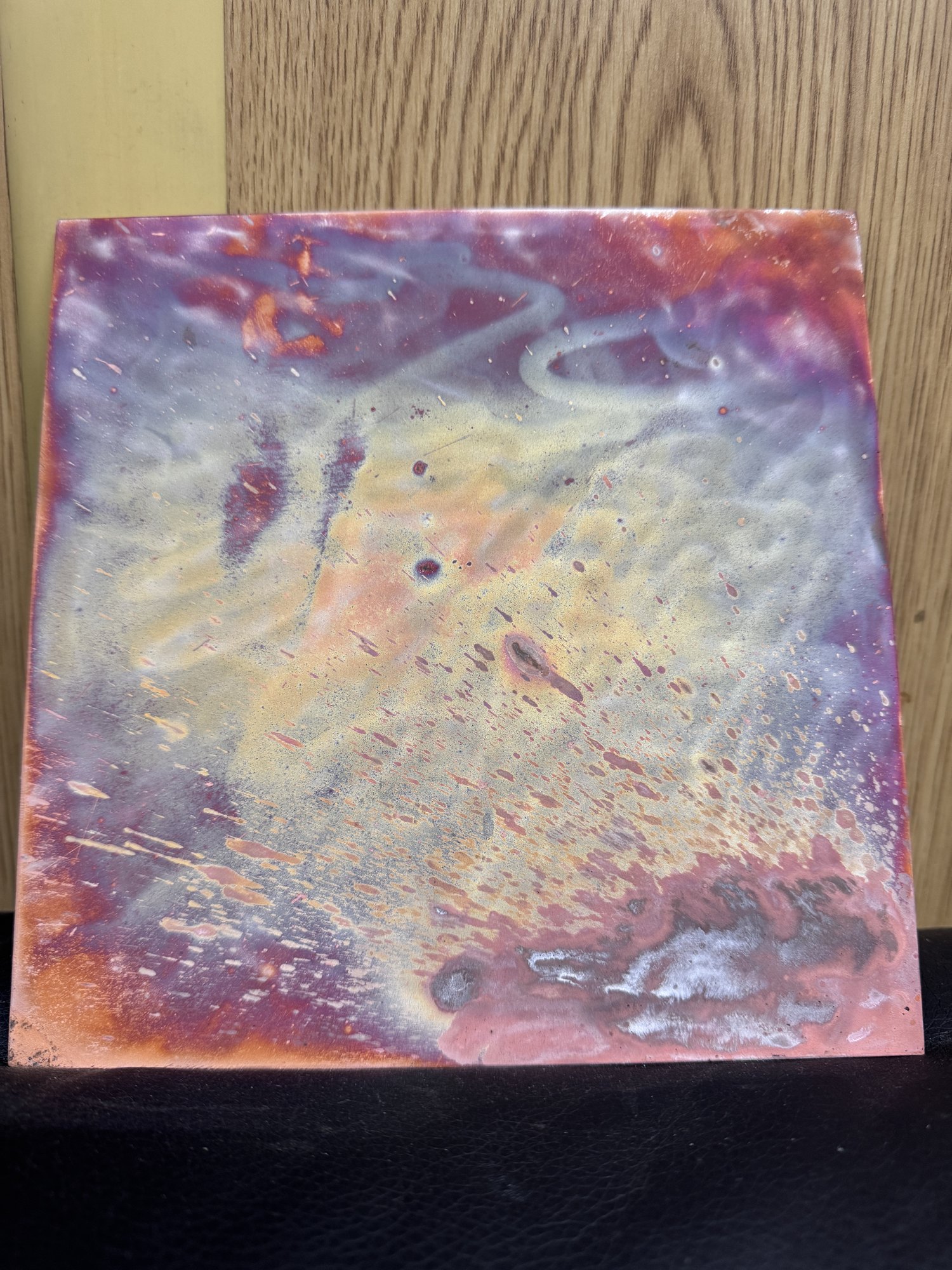
The finished surface after heat treatment.
Fire does not know when to stop.
Air does not know where to move.
A drop does not know where it should fall.
Metal does not know what it should become.
FOUR ELEMENTS ARE NOT ENOUGH.
Your hand determines the trajectory.
Your eyes follow the colour.
Your intuition guides the next action.
Four elements create the conditions.
The fifth chooses the moment.
Watch the colour evolve.
Stop when the surface feels like yours.
No score. No correct answer.
Just a decision.
The conditions are set. You choose the moment.
Each surface begins differently.
Too early, and a transformation may be incomplete. Continued oxidation may reduce colour complexity. The stopping point is part of the work.
Artistic interpretation, not a scientific simulation. Colours and timing are illustrative, not experimental data or a universal heating sequence.
A metallic surface becomes a fleeting universe of colour.
UNIVERSE BORN
Universe born — a surface becoming something new.
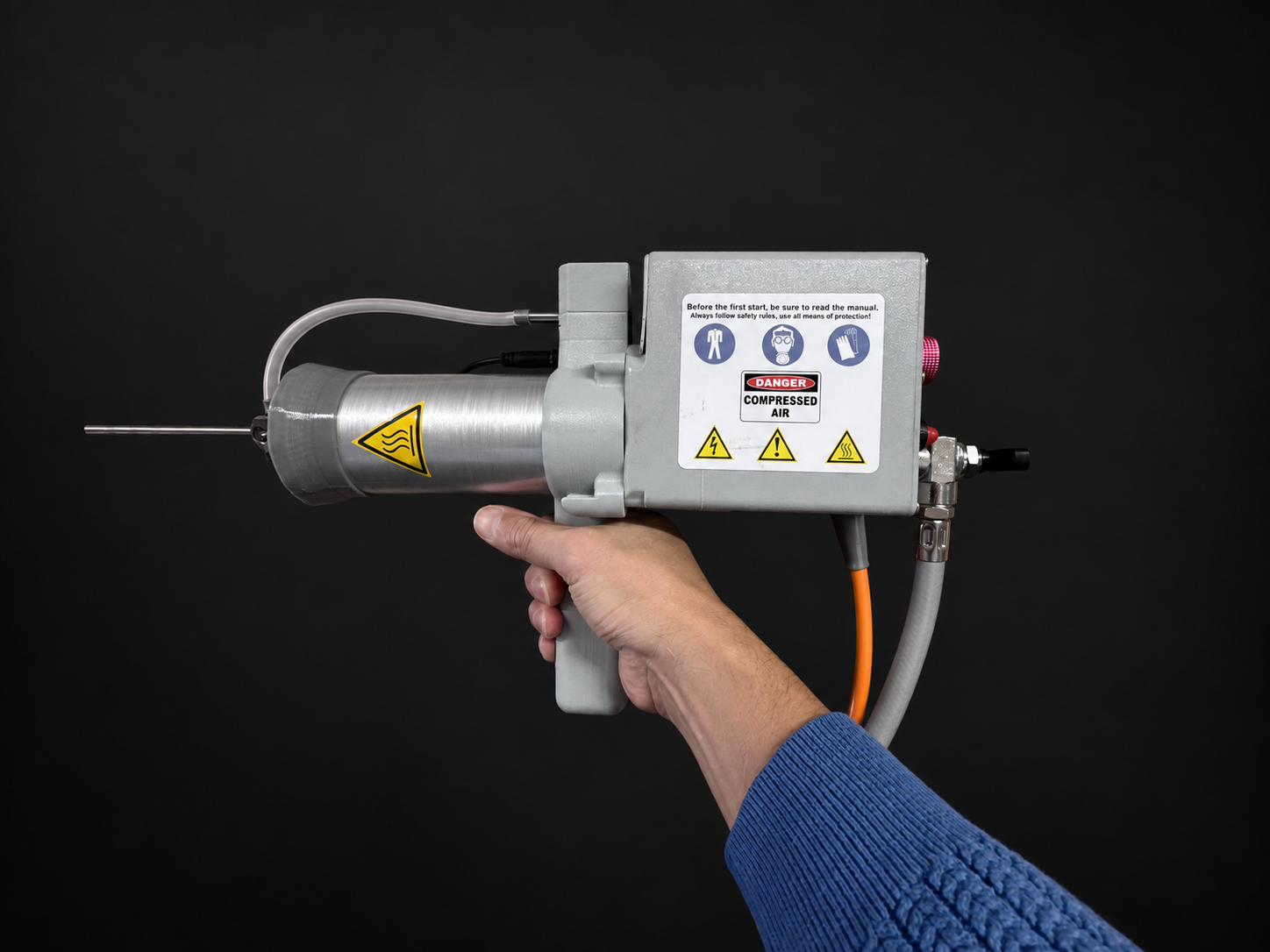
Metal deposition equipment and a thermal brush, in one instrument.
The first brush deposits matter itself. Cold spray builds metallic deposits on the substrate. Material, sequence, thickness, local density, passes and trajectory shape what follows.
A heated gas flow, without powder feed, can change selected areas after the initial thermal treatment. Distance, angle, speed, gas and surface temperatures, and trajectory influence the result.
In the author’s process, gas flow disperses liquid reagent from brush bristles into droplets. Their distribution creates a field of local reaction sites across the metallic surface.
A directed gas impulse redistributes a drop on the surface. Radial traces, secondary droplets and asymmetric reaction zones can emerge. Distance, angle, timing and the surface change the event.
Material. Sequence. Thickness.
Heat. Chemistry. Distance.
Angle. Trajectory. Timing.
Droplet breakup. Local reaction.
Thermal gradients. Microscopic variation.
A surface still becoming.
We don’t eliminate randomness.
We collaborate with it.
Similar conditions can create related, yet distinct surfaces. Small differences in movement, morphology, droplets and thermal history matter. The process can be repeated; the individual event remains its own.
Metal. Chemistry. Heat.
Air. Time.
A place for an event that really happened.
Not a picture of the universe.
A universe of associations
within a physical surface.
Colour, texture and the marks of a moment. Look closer at the surface.
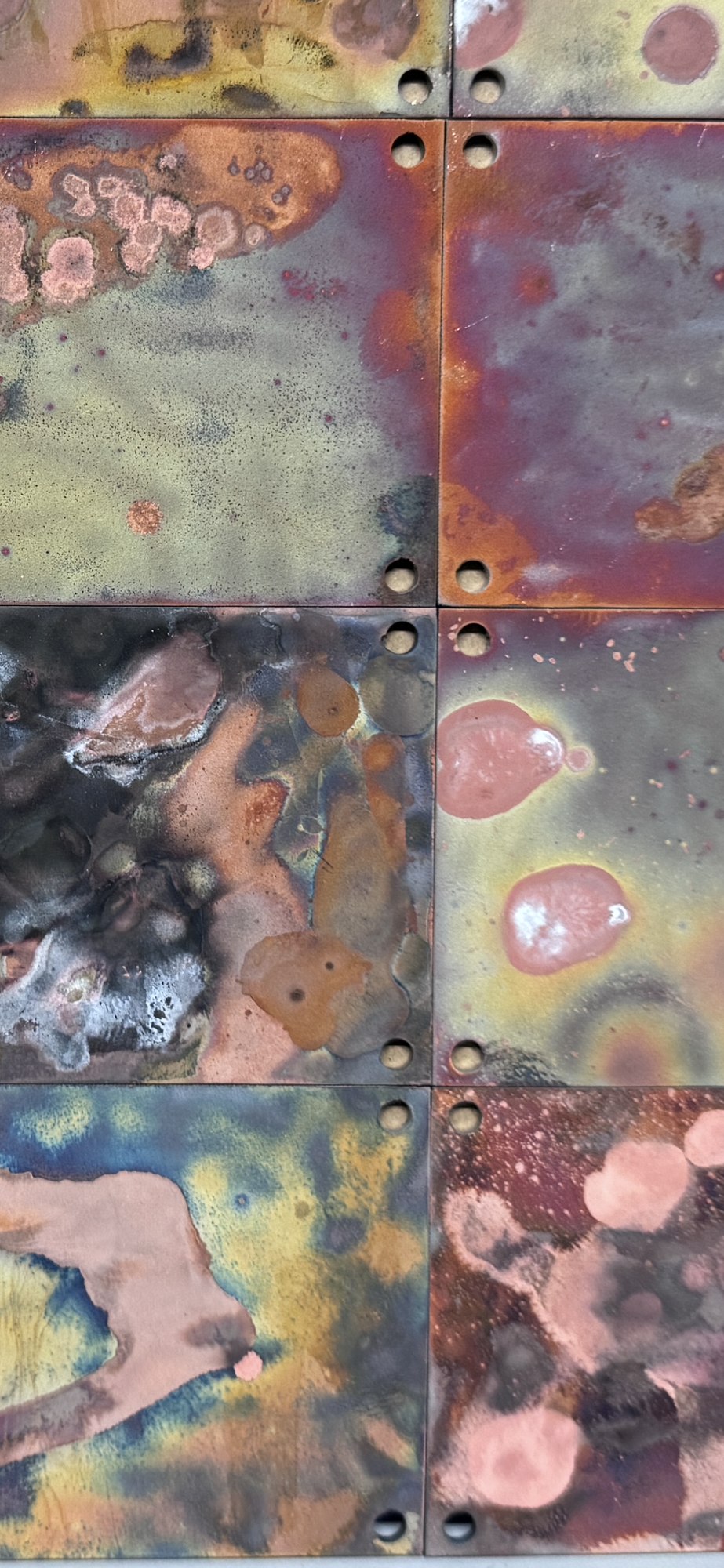
Real metallic surfaces. No two events leave the same trace.
No conventional paint. No organic colourants or polymer colour layer as the source of the visual effect.
Colour arises through the metallic surface, its reaction products and its interaction with light. The material itself becomes the medium.
This describes the source of colour. Any optional protective finish must be documented separately; it is not the colour-forming principle.
Metal → primer → binder + pigment → colour
Metal → metallic deposits → reaction
→ surface structure → light → colour
An inorganic colour system avoids reliance on organic colourants as the source of the effect. It does not establish absolute UV stability. Oxidation, corrosion, humidity, abrasion and any protective finish may change appearance. Durability and colour retention require testing on documented samples.
Alchemy describes the experience.
Materials science investigates the mechanisms.
The author describes colour development during heating, local changes under a heated gas flow, and patterns formed by redistributed droplets. These are process observations; this edition does not yet include measured datasets.
Metallic reflection, the optical properties of oxides and other reaction products, morphology and scattering may all contribute. Thin-film interference may contribute to the observed colours alongside the intrinsic optical properties of metals, oxides and other reaction products.
The contribution of interference requires experimental confirmation. Microscopy, chemical analysis, film-thickness measurements and spectroscopy can help distinguish mechanisms. Recorded temperature histories and repeated samples can assess repeatability.
Study it.
Question it.
Improve it.
Create with it.
The originator’s intention is to contribute the fundamental process freely to the world, so artists, researchers and engineers can continue its development.
Explore the ideas behind MMA and discover a new relationship with metal, colour and creative possibility.
MMA equipment is available on its own, as a complete starter kit, or as an expanded luxury kit. Choose the starting point for your own creative practice.
Contact Evgueni Semenov to discuss kit contents, workspace requirements, pricing and availability. The exact equipment and materials are confirmed individually.
Discuss your MMA kitCapture a moment from an imagined distant universe. A star is born. Another ends in a supernova. Across the metal, a fleeting constellation becomes a work that exists only once.
You don’t need to be an artist to begin.
You become one by creating.
The next surface has never existed before.
Modern Metal Alchemy invites artists, designers and collectors to explore one-of-a-kind metallic surfaces. Metal deposition, chemical patination and heat become tools for contemporary metal art, where each surface records a unique sequence of gestures and reactions.
For curious people, the process opens a path to creative exploration: learning to observe, experiment and respond to matter. Discover the works, explore the open technology, or contact Evgueni Semenov to discuss your interest in MMA.
Start a conversationMY HAND YOUR HAND
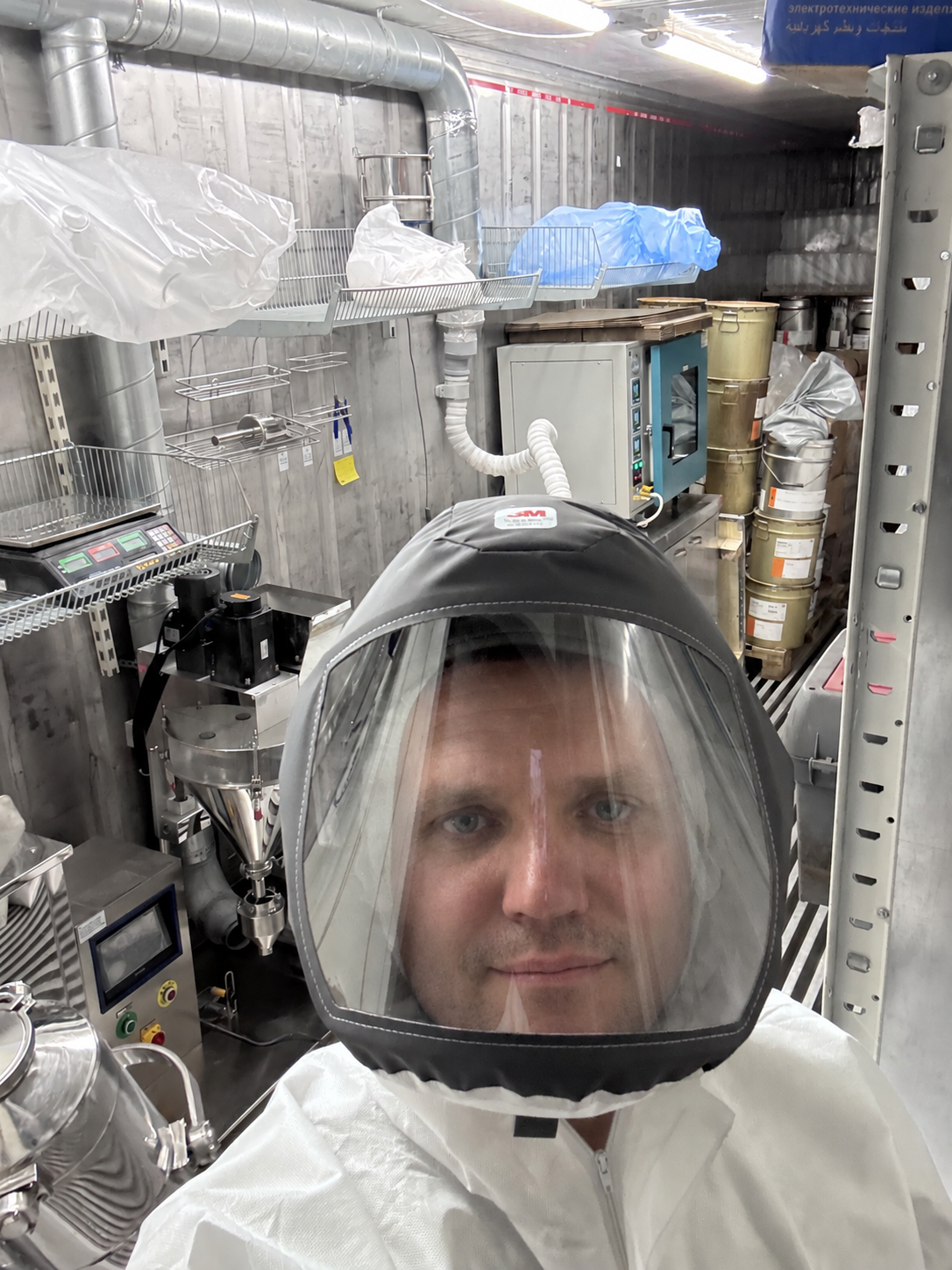
Here, in my laboratory, I prepare the materials that become our palette. Metals and inorganic compounds take the place of conventional paints. Through movement, chemistry and heat, they reveal unpredictable cosmic landscapes — each one a moment that will never repeat.
Imagined universes, born on real metal. No organic colourants or polymer colour layer as the source of the visual effect.
Begin your own exploration